Get Healthy!
- Posted June 10, 2026
Retro Video Game Aids Stroke Recovery, Improves Arm Function
A customized throwback video game might help stroke survivors regain arm function, a new study says.
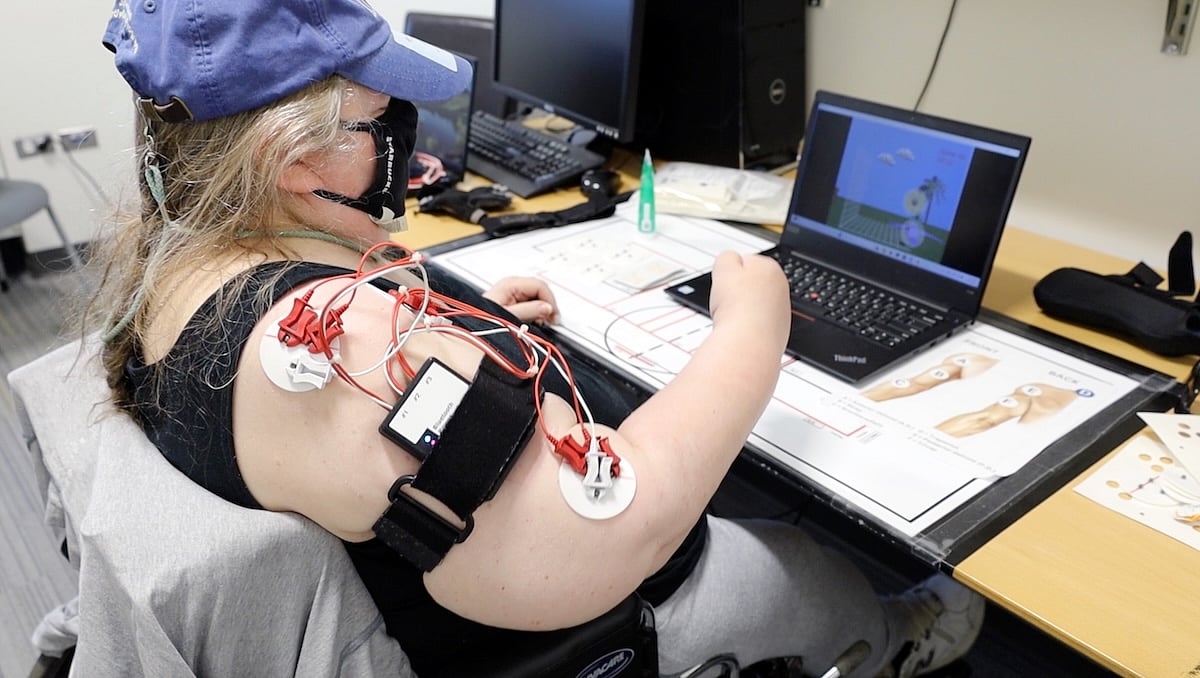
The '90s-style video game requires players to use their arm muscles to complete tasks like flying a helicopter around the screen to hit a moving target, researchers reported June 8 in the journal Neurorehabilitation and Neural Repair.
This muscle retraining helps separate the brain’s uncoordinated movement signals, enabling muscles to work independently again, researchers said.
After six weeks playing the game, stroke survivors improved arm function by nearly eight times better than those in a control group, and kept improving even after therapy ended, researchers said.
“Here we're doing something different,” said senior researcher Dr. Mark Slutzky, a professor of neurology and neuroscience at Northwestern University in Chicago. “We're treating the impairment directly and measuring how much the actual arm improved in addition to performing certain functions. We found our conditioning really caused their improvement.”
A stroke can cause the brain’s movement signals to become disrupted, causing muscles to fire in an uncoordinated way. This makes it difficult for stroke survivors to extend their arm forward with a straight elbow, researchers said, because their biceps activate at the wrong time.
The new video game training uses a small device on the impaired arm to identify abnormally coupled muscles, and retrains them to move independently again.
The device tracks electrical activity from the muscles, using its readings to move a cursor in the video game.
“We have them hit targets that are farther and farther away from that diagonal until they have to separate their muscles and can only hit it by activating one of the muscles and not the other,” Slutzky said in a news release.
To test this approach, researchers divided 59 stroke survivors into three experimental groups and one sham control group.
The four teams trained for six weeks total, playing the game for 90 minutes a day for five days a week at home and one day in the lab.
All experimental groups improved more than four times the control group, results showed.
And one group that trained on up to three different muscles improved by nearly eight times as much as the sham group, researchers said.
“It seems most likely that group three improved the most because they received an extra week of training on the muscles that were causing the most impairment,” Slutzky said.
Participants also enjoyed playing the game.
One participant wrote in a survey response, “the whole experience was enjoyable and helpful.” Another person wrote, “Definitely I benefitted from the game, both physically and mentally.”
Researchers are now working to make the game’s wearable device wireless, and to upgrade the games to be more engaging. They also plan to test the approach on stroke survivors’ legs.
More information
The American Stroke Association has more on stroke rehabilitation.
SOURCE: Northwestern University, news release, June 9, 2026
